2026-09-09 09:52:51
Jewellery CAD Design Files: How to Choose Accurate 3D Designs for Manufacturing
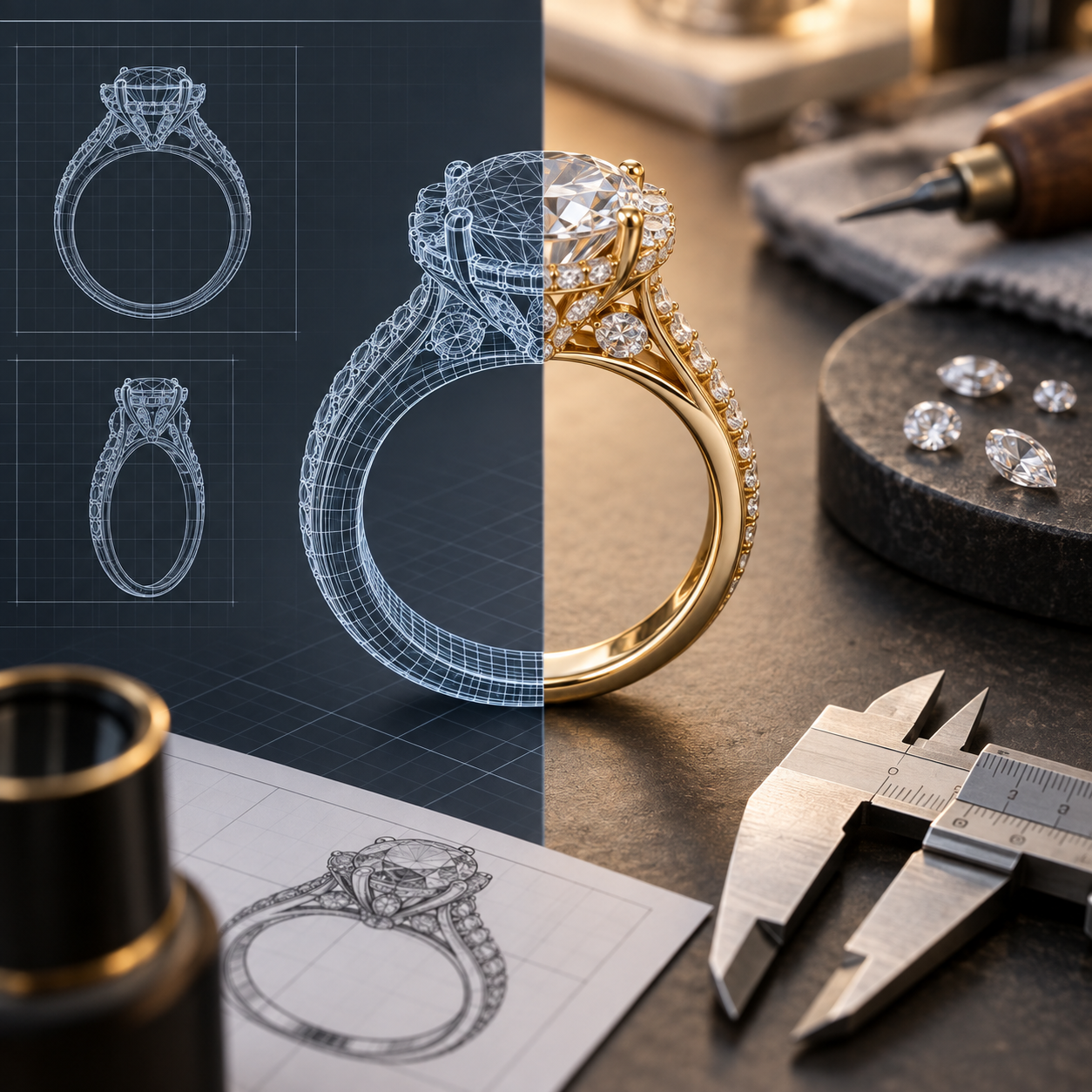
The introduction of jewelry 3D CAD designs has transformed the processes involved in the development of innovative jewelry by designers and manufacturers. Unlike before where sketching or manually creating the prototype was the major option available to a jewelry designer, the designer now has access to a digital model that he uses to visualize the creation, modify, measure its dimension and prepare the jewelry for production. Not all beautiful designs that appear on the computer screen will always be appropriate for the production process.
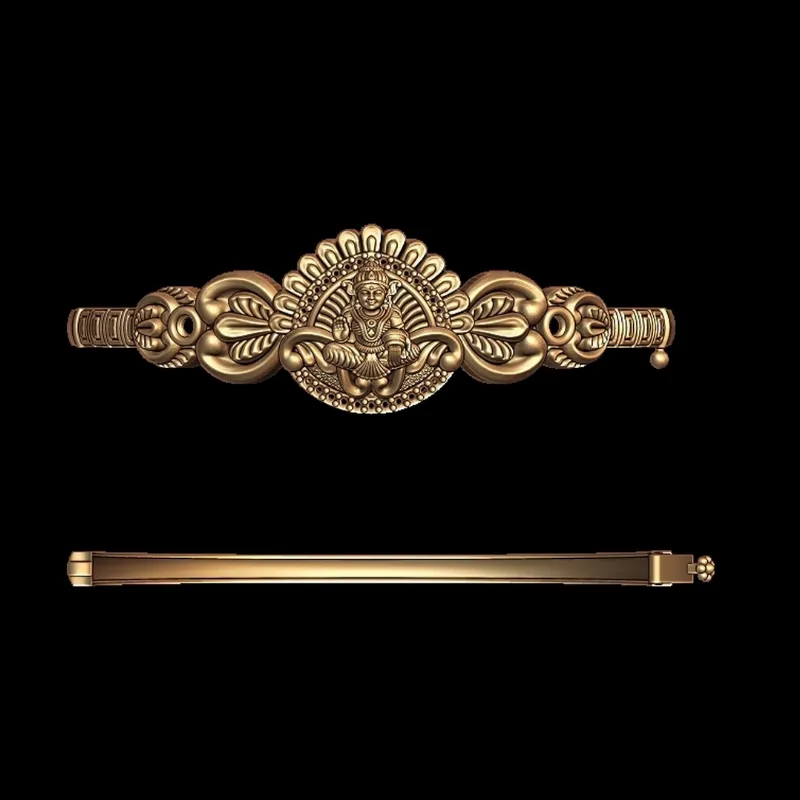
Selection of the right digital design is important for companies seeking to minimize production mistakes and saving time in their business activities. The right design must possess visual beauty and also other factors like proper thickness, proper measurements, good geometry, proper stone setting and also fit into the production process. There are digital design platforms like CadWala that offer many ready to use jewelry CAD and STL designs for your choice.
Why Accuracy Matters in Jewellery CAD Designs
One of the key parameters in choosing the digital jewellery model is its accuracy since any dimensional mistakes might influence the final result. A ring with an incorrect size, an improper fitting of a stone into the setting, and a fragile decoration will need corrections prior to the beginning of the manufacturing process. As a consequence, accurate jewellery 3D CAD models for manufacturing must have correct geometry which can be checked and edited before entering the phase of 3D printing, casting, CNC machining, and others.
Having prepared the CAD model, one can also avoid possible miscommunications among the designer, manufacturer, casting experts, and jewellery companies. It gives all the participants of the discussion a chance to use one file to discuss dimensions, proportions, stone setting, and the whole design. Such approach helps to prevent any misunderstandings and enables changes before using any materials.
How to Select Jewellery CAD Files for Manufacturing
Knowing how to select jewellery CAD files requires looking beyond the visual appearance of a model. Firstly, one needs to verify the format of the file and its compatibility with the CAD, slicing or manufacturing programs in use. The STL format is common for use in 3D printing and manufacturing workflows, whereas there might be more suitable formats if further editing of the model or its changes using CAD are required. The database of CadWala consists of digital jewelry models and STL files for various jewelry categories, which gives designers an opportunity to download pre-made designs and make adjustments according to their needs.
After that, one needs to analyze the geometric form of the model. It should contain closed forms, correct edges, correctly connected pieces, right wall thickness, lack of superfluous overlapping pieces or disconnected areas. All these aspects may affect the possibility of successful transformation of the model into a printable or castable pattern. One should pay attention to the size of the object and think about the material of its creation, manufacturing technology, durability and finishing process.
Key Factors to Check Before Buying a CAD Design
- File Format and Compatibility: Determine whether the available file format will work with your current CAD program, slicer, render software or manufacturing technology. Compatibility will save you from unnecessary conversions and editing.
- Dimensions and Proportions: Look at the size of the whole piece, its thickness, proportions, and placement of components. Although a nice-looking design also needs to fit into the right dimensions.
- Geometry and Surface Quality: Make sure that the model has no overlapping geometries, clean surfaces, solid volumes. Better prepared geometry will help you to avoid some issues during printing, casting and other operations.
- Stone Settings and Functional Elements: If there are such functional parts as prongs, bezels, channels or gemstone settings in your design, make sure that they have enough space and are suitable for your stone and manufacturing process.
- Potential for Customization: It’s important to choose those models which could be adjusted in case if customisation is needed. It will be very helpful for rings, pendants, bracelets and other items that require customization by their customers.
Understanding Manufacturing Requirements Before Choosing a Design
The assessment of a 3D CAD print model is always relative to the method of producing the final product. For instance, the model designed for resin printing and casting might be different from that for direct metal production. Design for the casting needs to take into account all aspects of geometry, thickness, connection and others that might affect the process of making the pattern itself. Of course, one has to consider the post-production processes like polishing, stone setting, etc.
Files for ready-to-use manufacturing of jewellery can save a lot of time since many of the digital aspects of designing have been already done. Still, the "ready-to-use" aspect must not be considered as "ready-for-everything." The manufacturer still needs to check the size and the geometry of the model according to its own production process. Especially this is true when designing very thin parts, intricate patterns, stone settings, etc.
Choosing Designs Based on Jewellery Type
There are different design requirements for various types of jewellery. Rings should have an accurate fit and solid structural areas at their shanks and settings. Pendants should have proper attachment areas and be proportioned right, while earrings might require special consideration of weight, symmetry, and attachment areas. Bracelets and bangles should be dimensionally consistent and have enough structural integrity to be used on a daily basis. Some more complex decorative models will require additional care in designing details.
It is important to choose jewellery design files that take into account not only the appearance but also the needs of particular types of jewellery. A model that looks great on a computer render might need to be redesigned to become a strong physical product. It will save time when choosing 3D Jewelry CAD files that were created with manufacturing in mind.
Why Ready-Made Jewellery CAD Files Can Benefit Manufacturers
Creating every jewelry design can take quite a long time, particularly when the firm needs many of such designs or keeps creating new ones on a frequent basis. Pre-designed CAD models can act as a starting point and be customized and used during the process of manufacturing. This way, the designer would have more time to concentrate on customizing and creating designs rather than creating models each time.
Another advantage of using CAD model is the opportunity to view and change the model before its production. The digital model enables analyzing the proportions, decorations, and other features of the future design. For firms dealing with various customers’ orders, this method enables accelerating the design process..
What Makes a Jewellery CAD File Manufacturing-Friendly?
An ideal CAD file that is designed for manufacturing purposes will have neat and well-constructed geometry, suitable thickness, correct dimensions, and details that relate with the type of manufacturing process involved. An ideal CAD file will also lack excessive geometry that might be a hindrance during slicing, casting, or conversion processes. As regards gemstone jewellery, it is important to note that stone seats and setting details need careful inspection since their dimensions impact the final assembly.
An ideal design will also be practical when it comes to the finishing and post-production processes. Design areas that are too narrow, complicated, and difficult to access might pose a challenge to the polishing process. As a result, an ideal CAD model is not always the one with the most complicated design.
Why Choose CadWala for Jewellery CAD Design Files?
The website CadWala offers a range of virtual 3D designs of various pieces of jewellery along with CAD/STL files specifically meant for the use of jewellers and jewellery-related businesses. The list includes all types of jewellery products including rings, necklaces, earrings, bracelets, pendants, etc. CadWala also makes digital download services available for its customers who do not require physical delivery of their purchase.
As far as companies that might want to use some jewellery designs for creating new products, CadWala will allow you to easily make the first step of creating jewellery, as it offers already designed models that you may review and customize as per your needs.
Final Checklist Before Manufacturing
Before moving ahead with manufacturing of any CAD design, have a quick check on the following aspects of its file: the format, dimensions, geometry, thickness, stone settings, connections and manufacturability. Verify if the design is compatible with your chosen 3D printing, casting, CNC or any other manufacturing technology. If necessary, modify the design before making the physical prototype or pattern.
Jewellery 3D CAD designs are not just meant to be visually appealing but they need to serve the purpose of providing a solid base to make accurate and manufacturable jewellery designs. Based on the verification of geometric properties, dimensions, file compatibility, production needs and customization, one can pick up those 3D jewellery designs which flow seamlessly from concept to the actual product. With ready-to-use CAD designs offered by CadWala, jewellery businesses can have an extensive range of digital designs at hand without spending much time in new projects.