2026-10-27 05:44:22
Shreenathji 3D Models Best CNC and 3D Printing Designs
Shreenathji 3D Models: Best CNC and 3D Printing Designs
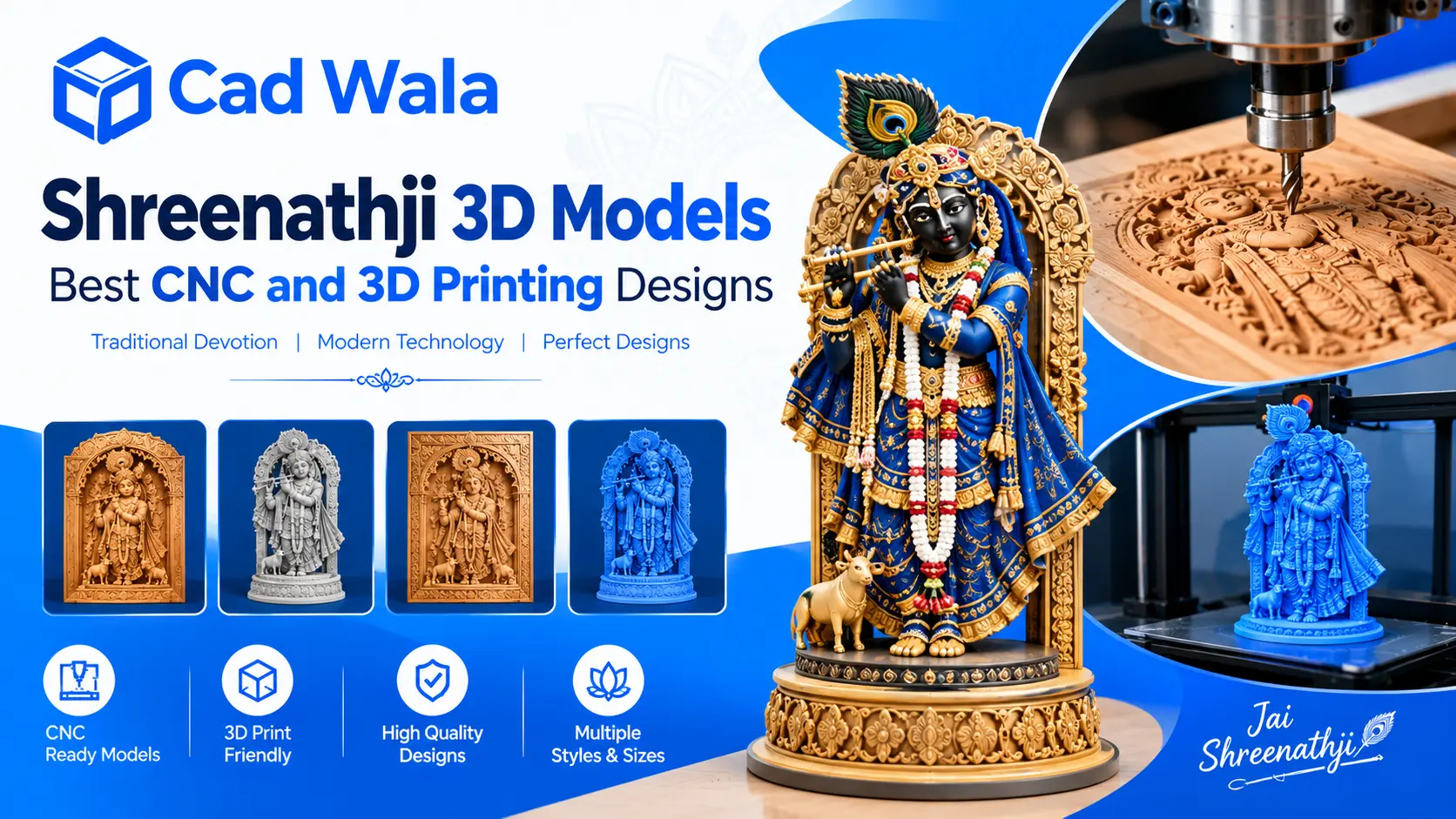
Shreenathji 3D Models are a beautiful choice for artists, designers, temple decorators, and manufacturers who want to create detailed religious artwork using modern CNC machines and 3D printers. From traditional wall panels to decorative mandir designs, these models help bring the beauty of Shreenathji into physical form. Whether you want to create a wooden carving, a decorative frame, or a detailed 3D-printed idol, choosing the right design is the first step toward getting a beautiful result.
Shreenathji holds a special place in the hearts of devotees, particularly those who follow the Pushtimarg tradition. His artistic appearance, traditional ornaments, and distinctive expressions make his images popular for home temples, religious spaces, and decorative projects. With the help of digital modeling, artists can now turn these traditional designs into detailed carvings and three-dimensional objects.
In this guide, you will learn about different design options, CNC carving, 3D printing, file formats, and useful tips for selecting the right model for your project.
What Makes Shreenathji 3D Models Special?
Shreenathji artwork combines religious meaning with traditional Indian craftsmanship. His raised hand, decorated clothing, ornaments, and detailed facial features give artists many opportunities to create beautiful designs.
Digital models make it easier to reproduce these details with the help of modern manufacturing equipment. Instead of creating every small element manually, designers can prepare a digital model and use compatible machinery to produce the finished piece.
Here are some popular applications:
- Home mandir decoration: Create attractive panels and decorative pieces for your home temple.
- Wooden wall art: Use CNC carving to make detailed Shreenathji designs on wood.
- Temple interiors: Add carved panels to doors, pillars, and decorative backgrounds.
- Decorative frames: Create artwork that can be displayed in homes, offices, and devotional spaces.
- Customized gifts: Produce personalized religious artwork for festivals, housewarming ceremonies, and other special occasions.
The best design depends on where you plan to use it. A large wooden panel may need a different level of detail from a small printed idol.
Popular Shreenathji 3D Design Options
A good Shreenathji 3D design should balance traditional appearance, fine details, and practical manufacturing requirements. Before selecting a file, consider the final size, material, and machine you plan to use.
1. Traditional Shreenathji Face Designs
Face designs focus on the expression, eyes, ornaments, and head decoration. They are suitable for decorative plaques, wall panels, and smaller religious artwork.
For CNC carving, a model with clearly defined facial features and sufficient depth can help produce a more attractive result. For 3D printing, the model should have suitable surface details and a stable structure.
2. Full Shreenathji Idol Models
Full idol models include more of the figure, along with clothing, ornaments, and other decorative elements. These models can be used for 3D printing or adapted for suitable carving projects.
When choosing a full figure, check whether the model is intended for display, carving, or another manufacturing method. Not every digital sculpture is suitable for every machine.
3. Shreenathji Wall Panel Designs
Wall panels are popular for home temples and decorative interiors. They may include floral borders, ornamental patterns, arches, and other traditional elements surrounding the main figure.
These designs work particularly well when the composition is planned around the available panel size. A clear central figure and balanced border details can make the finished artwork look more refined.
4. Decorative Shreenathji Backgrounds
Some projects require a complete decorative background rather than only the main figure. These designs may feature flowers, leaves, arches, and traditional patterns.
Background elements can add depth to a CNC-carved panel, but excessive detail may increase machining time. Choose a design that matches both your decorative goals and your production budget.
Shreenathji CNC Design: Creating Detailed Wooden Carvings
A Shreenathji CNC design is useful when you want to turn digital artwork into a physical carving. CNC routers follow programmed toolpaths to remove material and reproduce the selected design on a suitable workpiece.
Wood is a common choice for religious wall panels, decorative frames, and mandir interiors. Depending on the design and machine setup, other materials may also be suitable.
How CNC Carving Works
The process usually begins with selecting or creating a digital model. The designer then prepares the file for the machine and generates toolpaths using compatible CAD/CAM software.
The main steps include:
- Choose the model: Select artwork that matches the dimensions and intended use of your project.
- Check the geometry: Review the depth, raised areas, fine details, and overall shape.
- Prepare the toolpaths: Use suitable software to create machining instructions for the CNC router.
- Select the material: Choose an appropriate wood or other material based on the project.
- Run a test: A small test carve can help identify problems before machining the final panel.
- Finish the carving: Sanding, polishing, painting, or other finishing work can improve the final appearance.
Choosing Shreenathji 3D Models for CNC Router Projects
When selecting Shreenathji 3D models for CNC router work, pay attention to surface depth, fine details, and the size of the cutting tools.
Very small features may not appear clearly when carved at a large scale with unsuitable tooling. Similarly, a model with deep relief may require additional machining time and careful planning.
For the best results, match the model to your machine's capabilities, available cutting tools, material thickness, and desired finish.
Shreenathji 3D Printing Model: Turning Digital Artwork into a Physical Object
A Shreenathji 3D printing model provides another way to create detailed religious artwork. Unlike CNC carving, which removes material from a workpiece, 3D printing builds an object layer by layer.
This method can be useful for creating small idols, decorative figures, miniature temple accessories, and display pieces. It also allows designers to experiment with different sizes before producing the final object.
Important Features of a Good 3D Printing Model
Before printing, check the following features:
- Complete geometry: The model should not contain unintended holes, broken surfaces, or overlapping parts that cause problems in the printing workflow.
- Suitable wall thickness: Thin sections may break during printing or handling.
- Appropriate detail: Small ornaments and facial features should be suitable for the selected printer and scale.
- Stable positioning: The model should be oriented to reduce unnecessary support material and improve print quality.
- Correct dimensions: Check the height, width, and depth before starting the print.
The right material depends on the printer, intended use, and level of detail required. FDM printers commonly use filament, while resin printers can reproduce fine details on suitable models. Follow the printer manufacturer's safety and material instructions.
After printing, the model may need support removal, cleaning, sanding, or painting. Careful finishing can make a major difference to the final appearance.
Shreenathji 3D Printing STL File: What Should You Check?
A Shreenathji 3D printing STL file is a common choice for preparing a model for 3D printing. STL files describe a surface using triangles and are widely supported by slicing software.
However, downloading an STL file does not automatically mean it is ready to print. The quality and structure of the model still matter.
Before using a file, check these points:
- File integrity: Confirm that the file opens correctly in your modeling or slicing software.
- Watertight geometry: A solid, properly closed mesh helps the slicer interpret the model correctly.
- Scale and dimensions: Make sure the model fits your printer and intended display area.
- Surface detail: Zoom in to check whether ornaments and smaller features are represented clearly.
- Printing requirements: Review the need for supports, suitable orientation, and appropriate layer settings.
- Usage permission: Check the creator's license before using the model commercially or distributing copies.
Some CNC workflows also use STL files, but the file may need to be processed through compatible CAM software before machining. Other workflows may require different formats, so always confirm the requirements of your equipment.
How to Choose the Right Shreenathji Model for Your Project
Choosing a suitable model becomes easier when you decide what you want to make before searching for files.
If your goal is a wooden wall panel, focus on relief depth, the panel dimensions, and the details your CNC router can reproduce. If you want a small display idol, look for a model designed for 3D printing with sufficient structural strength.
Budget is another important factor. Highly detailed models may require more machining time, longer printing periods, additional finishing, or more expensive materials.
You should also consider the experience of the person operating the machine. Beginners may find a clean, moderately detailed model easier to produce than a complex design with many fine elements.
Whenever possible, preview the model from different angles. A design that looks attractive in a front-facing image may have geometry or proportions that are less suitable for the intended project.
Common Mistakes to Avoid
Even a beautiful digital design can produce disappointing results if important details are overlooked.
- Choosing the wrong file type: Check that the file is compatible with your modeling, slicing, or CAM software.
- Ignoring the final size: A design that looks detailed on a computer screen may lose small features when produced at a smaller scale.
- Skipping a test: Testing a small section or using a sample print can help identify problems before committing to the full project.
- Overlooking finishing work: Sanding, polishing, and painting may be necessary to achieve the appearance you want.
- Ignoring licensing terms: Free access to a file does not always include permission for commercial manufacturing or resale.
Planning these details in advance can save time, reduce material waste, and help you achieve a better finish.
Conclusion
Shreenathji 3D Models bring traditional devotional artwork and modern manufacturing together. Whether you are creating a carved wooden panel, decorating a home mandir, or printing a small religious figure, the right digital model can help you achieve a detailed and attractive result.
Take time to compare the design, file format, dimensions, and manufacturing requirements before starting. A well-prepared model, suitable equipment, and careful finishing can make your project easier and more successful.
Most importantly, choose artwork that reflects the traditional style you want while meeting the practical needs of your project. With thoughtful planning, digital modeling can help preserve the beauty of Shreenathji artwork in a wide range of decorative and artistic forms.