2026-10-24 04:56:52
Khatu Shyam 3D Models for CNC Wood Carving and 3D Printing
Khatu Shyam 3D Models for CNC Wood Carving and 3D Printing
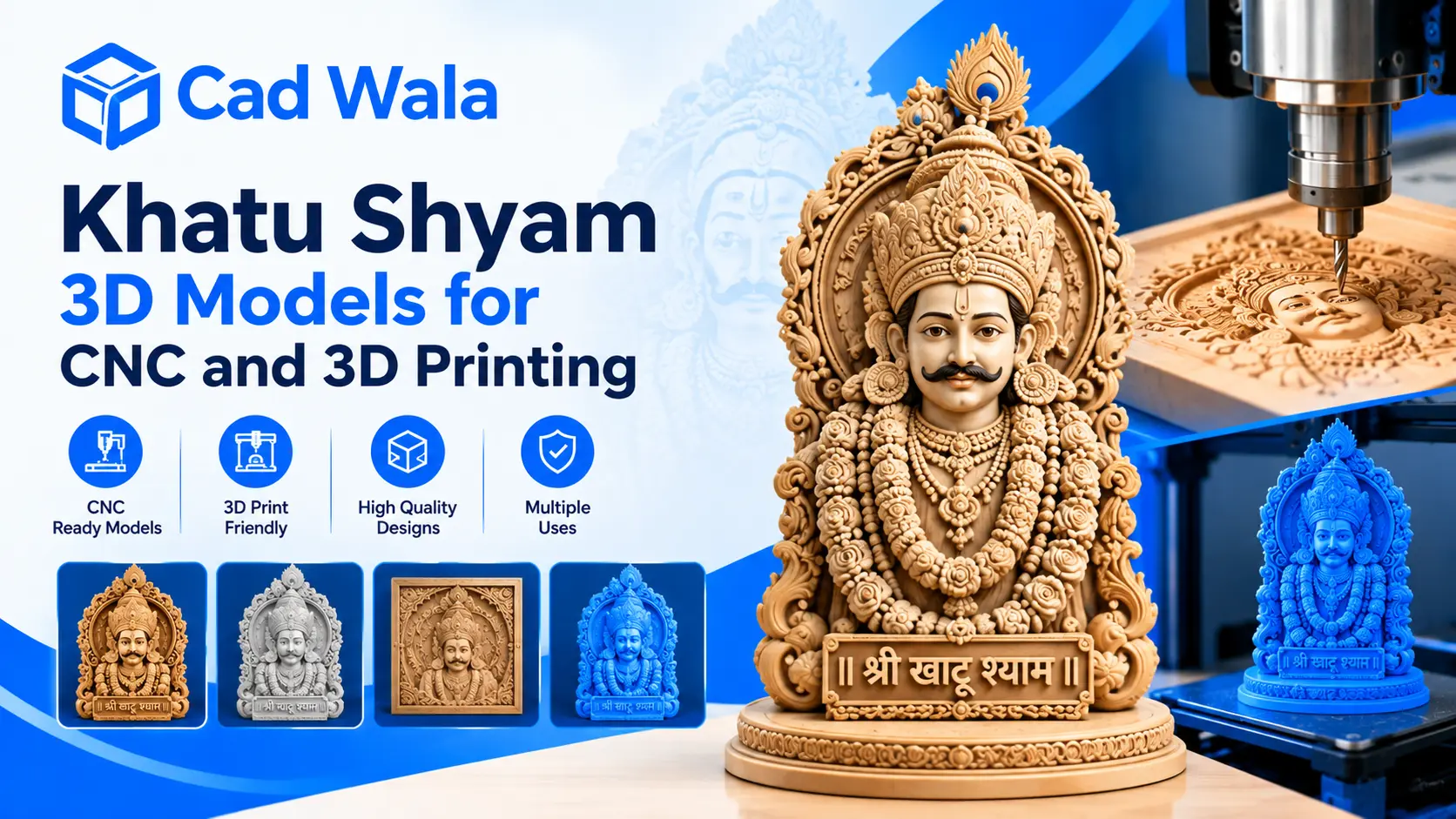
Khatu Shyam 3D Models are a great choice for artists, wood carvers, CNC machine operators, and 3D printing enthusiasts who want to create beautiful religious designs with fine details. Whether you want to make a wall hanging for your home temple, create a decorative wooden panel, or print a detailed idol, a suitable 3D model can help you turn your creative idea into a finished piece.
Khatu Shyam Ji holds a special place in the hearts of millions of devotees. His images are commonly used in home temples, पूजा rooms, devotional wall art, and decorative panels. With modern CNC carving and 3D printing technology, artists can now create these designs with greater detail and accuracy than traditional methods alone may allow.
Choosing the right digital model is the first step. You need a design that suits your machine, material, project size, and level of detail. In this guide, we will explore how these models work, what to check before choosing a file, and how you can use them for different creative projects.
What Are Khatu Shyam 3D Models?
Khatu Shyam 3D Models are digital designs that represent Khatu Shyam Ji in three dimensions. Unlike a regular photograph or a flat image, a 3D model contains depth and surface details that can be used to create physical objects.
Depending on the design, a model may include facial features, a crown, ornaments, clothing patterns, decorative borders, and a background. These details help artists create religious artwork with a more realistic and attractive appearance.
The models are useful for several purposes, including:
- Wooden temple panels and decorative doors
- Religious wall hangings and framed artwork
- Decorative nameplates and pooja room designs
- 3D-printed devotional figures and miniature idols
- Custom gifts for religious occasions
- Decorative pieces for homes, offices, and temples
Before selecting a design, consider how you plan to use the finished product. A model intended for a large wooden panel may require different details from a small 3D-printed figure.
Why Use Khatu Shyam 3D Models for CNC Wood Carving?
CNC machines help woodworkers create detailed designs by following digital instructions. Instead of carving every line manually, the machine follows a prepared toolpath to reproduce the selected design on a suitable material.
A good Khatu Shyam 3D model for CNC can help you create detailed devotional artwork while keeping the overall design consistent. This is especially useful when you need to reproduce the same pattern for multiple panels or decorative pieces.
For example, imagine a woodworker preparing a decorative panel for a home temple. The customer wants a detailed image of Khatu Shyam Ji with an ornamental frame. Creating every feature by hand could take considerable time. With a suitable 3D relief model and the correct machining setup, the woodworker can produce the main design more efficiently.
However, the final result depends on more than the digital file. The quality of the wood, cutting tools, machine settings, toolpath strategy, and finishing work all influence the appearance of the carving.
Features to Look for in a CNC Design
When choosing a model, pay attention to these important features:
- Clear facial details: The eyes, nose, and facial outline should remain recognizable after carving.
- Suitable depth: The relief should match the thickness of the material and the intended finished appearance.
- Balanced composition: The main figure should fit naturally within the available carving area.
- Well-defined ornaments: Crowns, jewellery, and decorative patterns should have enough separation to be carved cleanly.
- Compatible geometry: The model should be suitable for the CAD/CAM software and machining process you intend to use.
A detailed design is not always the best design for every project. Very fine features may be difficult to reproduce on a small panel or with a large cutting tool.
Choosing a Khatu Shyam CNC Wood Carving Design
A Khatu Shyam CNC wood carving design can be used to create devotional artwork for different spaces and applications. The right choice depends on the style you want and the size of the finished piece.
For a traditional home temple, a relief design with a decorative arch and detailed crown may work well. For a modern interior, a simpler design with a clean outline may look more balanced. Larger temple doors and wooden wall panels may benefit from a composition that includes borders or floral patterns.
Before purchasing or downloading a design, consider the following points.
- Check the dimensions. Make sure the model can be scaled to fit your intended panel without losing important details.
- Review the relief depth. The carving depth should be appropriate for your material and the desired three-dimensional effect.
- Check the file format. Confirm that the file can be imported into your CAD/CAM workflow or converted using software you already have.
- Review a preview. A clear preview can help you identify missing details, unwanted surfaces, or an unsuitable composition before machining.
- Confirm usage rights. If you plan to sell finished carvings, check whether the designer permits commercial use.
Taking these steps before starting the machine can reduce material waste and help you achieve a better finish.
What Is a Khatu Shyam Baba CNC Carving File?
A Khatu Shyam Baba CNC carving file is a digital file used to prepare a design for CNC machining. Depending on the workflow, it may contain a 3D relief model, surface geometry, or information that can be imported into software to generate toolpaths.
It is important to understand that a 3D model and a machine-ready toolpath are not necessarily the same thing. A model describes the shape of the design, while a toolpath tells the CNC machine how to cut it.
For this reason, you should check exactly what is included when selecting a file. Some downloads provide only the 3D model, while others may include additional formats or machining instructions.
Before carving, the operator should inspect the model, select suitable cutting tools, define the machining area, and simulate the toolpath in compatible software. A simulation helps identify potential cutting problems before they affect the actual material.
Woodworkers should also choose a suitable wood type. Softer woods can be easier to carve but may show less sharply defined details, while denser woods may support fine features but require appropriate tooling and machine settings.
Khatu Shyam 3D Model for 3D Printing
3D printing offers another way to turn devotional artwork into a physical object. A Khatu Shyam 3D model for 3D printing can be used for miniature figures, decorative idols, wall-mounted artwork, and other custom creations, provided the model is designed appropriately for the intended printing method.
Unlike CNC carving, which removes material from a solid block, 3D printing builds an object layer by layer. This makes it possible to create shapes that may be difficult to produce through conventional carving.
For instance, a designer may want to create a small Khatu Shyam Ji figure for a home temple. A suitable 3D model can be prepared in slicing software, where the user selects the scale, layer height, infill, supports, and other printing settings.
The quality of the printed result depends on the model, printer, material, and settings. Very small facial details may require a finer layer height or a printer capable of reproducing delicate features.
How to Prepare a Model for 3D Printing
Follow these basic steps before printing:
- Choose a suitable model: Make sure the geometry is appropriate for 3D printing.
- Check the mesh: Look for holes, disconnected surfaces, and other geometry problems that may affect printing.
- Select the size: Scale the model to match your display area and printer's build volume.
- Prepare the file: Import it into compatible slicing software and review the orientation and support requirements.
- Preview the layers: Inspect the slicing preview to check whether important details will print properly.
- Finish the object: After printing, remove supports carefully and sand, paint, or finish the model if required.
A little preparation can help prevent failed prints and improve the appearance of the finished devotional piece.
How to Choose a Khatu Shyam STL File for 3D Printing
A Khatu Shyam STL file for 3D printing contains the model's surface geometry in a widely used format for 3D printing workflows. However, the STL extension alone does not guarantee that a file is ready to print.
Before using the file, check its overall shape, mesh quality, scale, and level of detail. A model designed for a large decorative panel may not work well when reduced to a tiny figure because some features could become too small to reproduce.
Here are a few things worth checking:
- Mesh quality: The surfaces should be suitable for conversion into printable layers.
- Watertight geometry: A closed mesh is generally preferable because it helps slicing software interpret the object's solid shape.
- Correct proportions: The face, crown, ornaments, and other features should remain balanced at the intended size.
- Printer compatibility: Confirm that the model fits within the build volume and suits your printing process.
- Available detail: Look for clearly defined features that match the resolution of your printer.
STL files generally do not preserve full-colour artwork or all the material information that may be present in other 3D formats. If colour, textures, or additional model data are important, check whether the creator provides another suitable format.
CNC Carving vs. 3D Printing: Which Is Better?
Both methods can produce attractive devotional artwork, but they suit different needs.
CNC carving is a practical choice when you want wooden panels, carved doors, furniture decorations, or large relief designs. It works well for projects where the natural appearance of wood is an important part of the finished piece.
3D printing is useful for small figures, prototypes, custom shapes, and designs that are easier to build layer by layer. It also allows creators to test different sizes before committing to a larger project.
Your decision should depend on the final product rather than the technology alone. If your goal is a traditional wooden temple panel, CNC carving may be the better option. If you want a small decorative figure with complex shapes, 3D printing may be more suitable.
In either case, the quality of the digital model plays a major role in the final result.
Tips for Getting Better Results From Your 3D Model
Even a well-designed model needs the right preparation. Keep these practical suggestions in mind:
- Start with a preview or small test before committing to a large project.
- Choose the material according to the intended use and desired finish.
- Avoid reducing a highly detailed model beyond the point where its features remain visible.
- Check the file in your chosen software before starting production.
- Use suitable cutting tools or printing settings for the level of detail required.
- Allow enough time for sanding, polishing, painting, or other finishing work.
These simple steps can help you create cleaner and more consistent devotional artwork while reducing avoidable errors.
Conclusion
Khatu Shyam 3D Models make it easier for artists, woodworkers, and 3D printing enthusiasts to create devotional designs for home temples, decorative panels, religious gifts, and custom projects. The best model is one that suits your intended application, equipment, material, and preferred style.
For wooden artwork, look for a CNC-compatible relief with clear details and suitable carving depth. For printed figures, focus on mesh quality, printable geometry, scale, and the level of detail your printer can reproduce.
Before choosing any file, review its preview, confirm the supported format, and check the usage rights. With the right design and careful preparation, you can turn a digital devotional model into a finished piece that reflects your creativity and respect for Khatu Shyam Ji.