2026-09-09 04:14:41
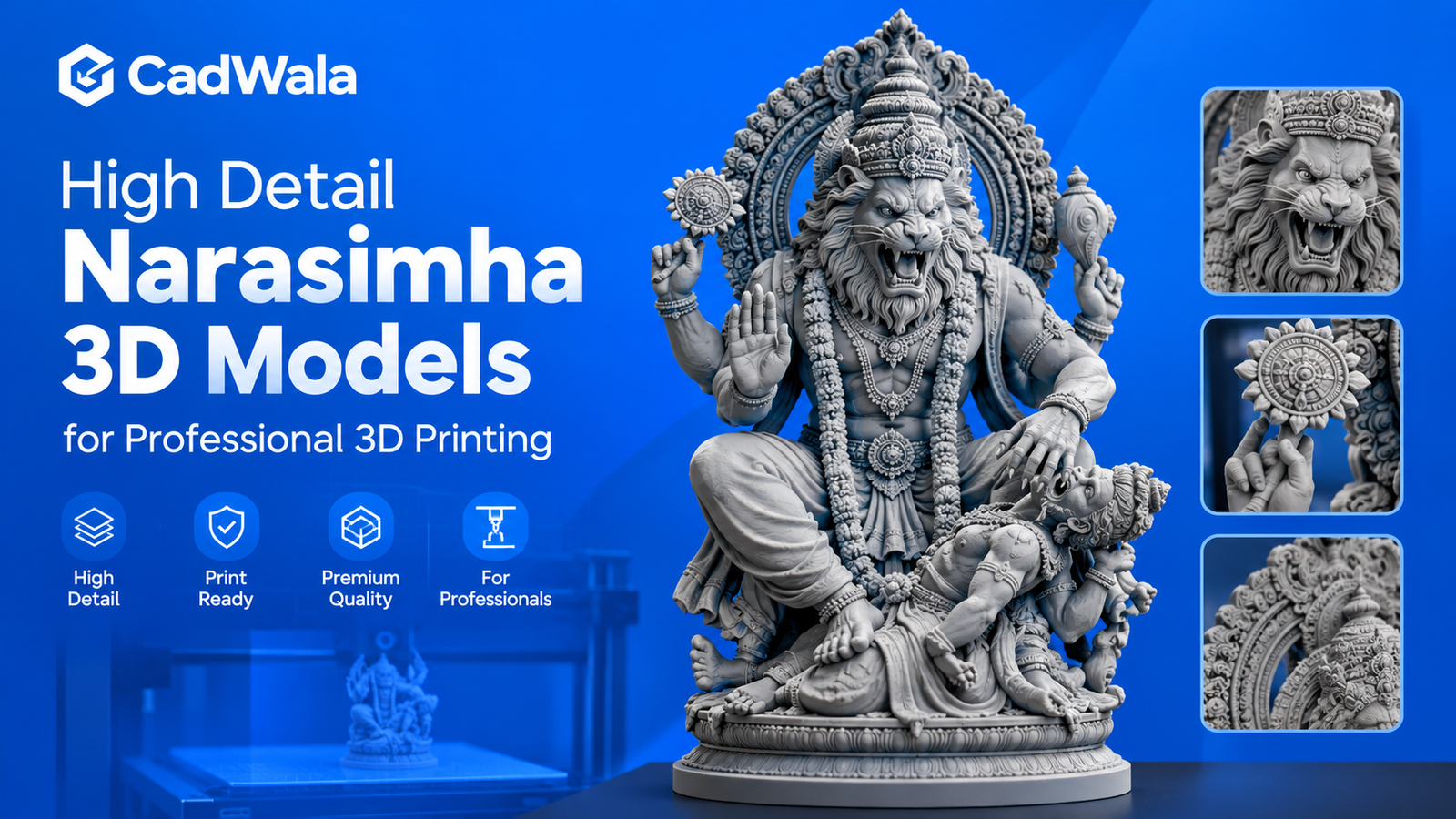
High Detail Narasimha 3D Models for Professional 3D Printing
Narasimha 3D Models are becoming a practical choice for designers, 3D printing professionals, artists, and manufacturers who want to create detailed religious statues with modern production methods. A well-made digital model can help you move from an idea on a screen to a physical statue with carefully defined facial features, ornaments, posture, and decorative details.
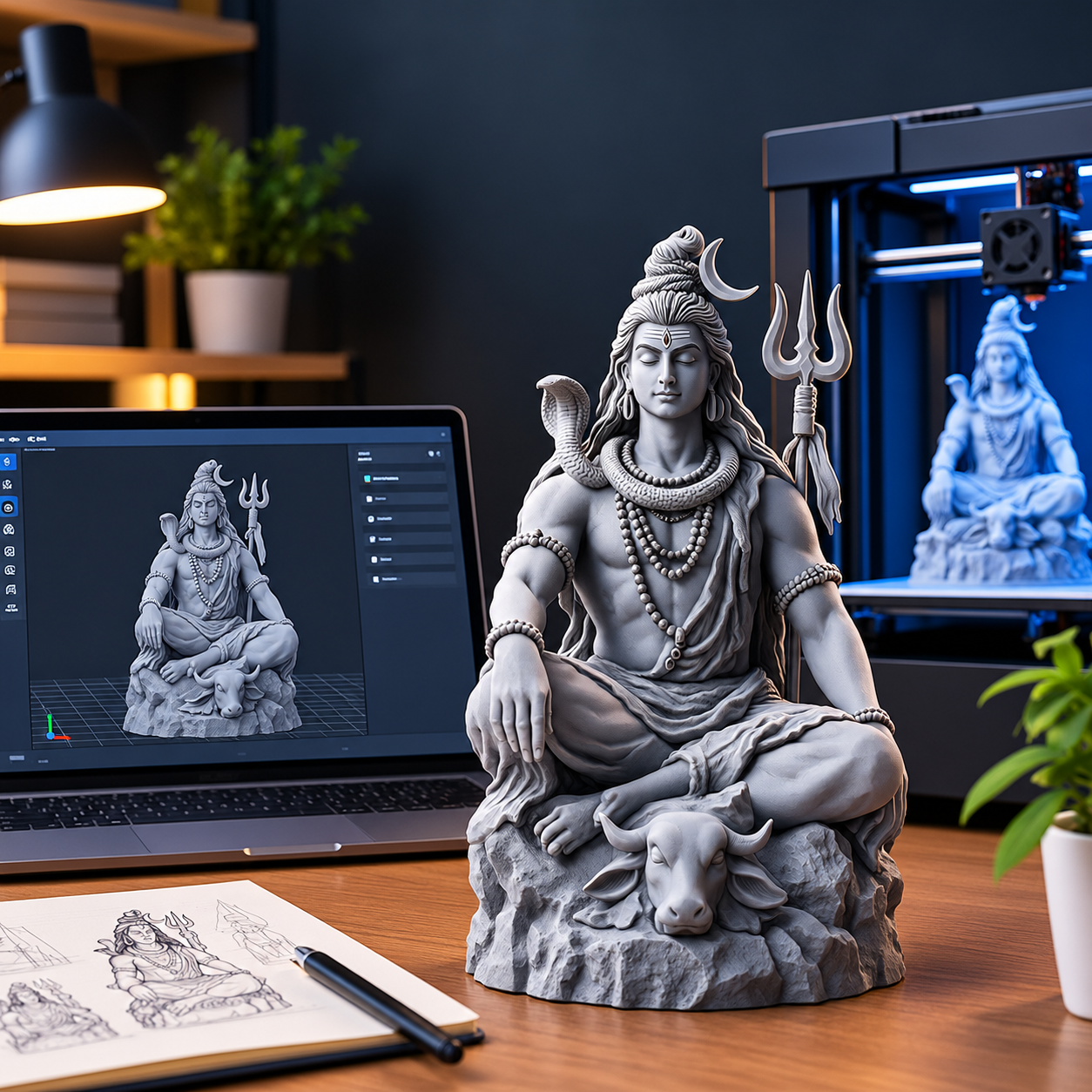
When you look at a traditional Narasimha statue, you may notice details such as the expression, crown, jewellery, clothing, hands, and overall posture. Reproducing these details accurately can take considerable skill when working manually. With a professionally prepared 3D model, the same design can be prepared for digital editing, scaling, rendering, and physical production.
This makes 3D modelling useful for both small creative projects and professional statue manufacturing.
Why Narasimha 3D Models Are Useful for Modern Design
For a designer, starting a new statue from scratch can be time-consuming. Every small element needs to be planned before the final piece can be produced. Narasimha 3D Models provide a digital foundation that can be reviewed and adjusted before printing or manufacturing begins.
You can change the size of the model, check its proportions, and prepare it according to your preferred production method. This is particularly helpful when you want to create a small decorative idol for a home, a medium-sized display piece, or a larger statue for a special project.
Digital modelling also makes it easier to experiment with different finishes and materials. Before committing to production, you can inspect the design from different angles and identify areas that may need improvement.
For professionals, this can save both time and material because potential design problems can be noticed before the physical printing process starts.
Choosing Detailed Narasimha 3D Printable Models
The quality of the digital file matters greatly when preparing a model for physical production. Narasimha 3D Printable Models should contain enough detail to preserve important features during the printing process.
Look closely at areas such as the face, hair, crown, jewellery, fingers, clothing, and decorative patterns. These features may look impressive on a computer screen, but they also need suitable geometry for the intended printing process.
A model designed for a large resin print may contain finer details than one intended for a smaller FDM print. Therefore, think about the final size before selecting a file.
It is also useful to check whether the model can be scaled without creating major problems. A good digital model should give you flexibility while maintaining the important visual elements of the design.
How Narasimha 3D Printing Turns a Digital Design Into a Statue
Narasimha 3D Printing follows a simple idea: a digital model is converted into a physical object layer by layer. However, achieving a good result requires more than simply pressing the print button.
First, the model is checked and prepared using suitable slicing software. The software divides the design into printable layers and creates instructions for the printer. Depending on the model and printer, you may need to add supports to delicate areas.
The choice of printing technology also affects the final result. Resin printing can be useful when very fine surface details are important, while FDM printing may be suitable for larger or more economical projects.
After printing, the statue may require cleaning, support removal, sanding, curing, or other finishing work. The final surface can then be painted or finished according to the project's requirements.
This complete process allows a detailed digital sculpture to become a physical piece that can be displayed, used as a prototype, or further developed for manufacturing.
Understanding Narasimha 3D Statue Models Before Production
Narasimha 3D Statue Models are not limited to one particular size or application. Designers can use them for prototypes, decorative pieces, artistic projects, product development, and larger manufacturing plans.
Before selecting a model, consider where the final statue will be used. If it will be displayed indoors, surface detail and appearance may be the main priorities. If it will be used as a master model for manufacturing, dimensional accuracy and a suitable file structure may become more important.
You should also check the overall pose. Narasimha can be represented in different forms and artistic interpretations. The expression, position of the hands, body posture, ornaments, and surrounding elements can all change the appearance of the finished piece.
Choosing a model that matches your intended design at the beginning can reduce the amount of modification required later.
Preparing for Narasimha Statue Manufacturing
Narasimha Statue Manufacturing can involve several stages, especially when the final product needs to be produced repeatedly. A digital model can be used as the starting point for prototyping before moving towards a larger production process.
For example, a manufacturer may first print a small version to examine the proportions and surface details. After making necessary changes, the approved design can be scaled or prepared for a suitable production technique.
Depending on the project, the printed model may become a finished product itself or serve as a master pattern for another manufacturing process.
This approach is useful because changes are easier to make during the digital stage than after a large physical production run has already started.
If you are planning commercial production, it is also important to consider wall thickness, structural strength, support requirements, and the limitations of your chosen printing or manufacturing method.
What to Look for in a Narasimha STL 3D Print File
A Narasimha STL 3D Print file is commonly used when preparing a model for 3D printing. STL is a widely supported format, making it convenient for many printing workflows.
However, having an STL file does not automatically guarantee a successful print. You should inspect the model before production to check for issues such as holes, disconnected surfaces, non-manifold geometry, very thin sections, or other problems that could affect slicing.
The level of detail should also match the size of the planned print. Extremely fine details may not appear clearly on a small model, while a larger statue can benefit from more detailed geometry.
It is also worth checking whether the file is provided in a suitable orientation and whether the model requires supports. Spending a little time preparing the file can make the actual printing process much smoother.
Making Your Narasimha 3D Models More Practical for Printing
A beautiful digital model needs to be practical for the intended manufacturing method. When preparing Narasimha 3D Models, consider the relationship between detail and physical size.
Small decorative models need simplified details that can survive printing, while larger models can retain more intricate patterns. Very thin ornaments or extended elements may require additional structural support.
You should also think about how the model will be divided if you plan to create a large statue. Printing a large piece in several sections can make transportation and production easier, but the sections must be designed so they can be assembled cleanly.
Post-processing should also be considered from the beginning. Some surfaces may need sanding, while detailed areas should be protected from excessive finishing that could remove important features.
Benefits of Using Digital Models for Professional Projects
One of the biggest advantages of digital modelling is flexibility. You can keep a master file and create different versions for different applications.
For instance, a designer may create one smaller version for testing, another version for a display piece, and a larger version for manufacturing. This reduces the need to recreate the entire design every time the project changes.
Narasimha 3D Printable Models can also help teams communicate more easily. A designer, manufacturer, and client can review the same digital design before production begins. This makes it easier to discuss proportions, details, dimensions, and required changes.
For businesses, this workflow can make product development more organised and reduce unnecessary physical prototypes.
Final Thoughts
Narasimha 3D Models bring traditional statue design into a flexible digital workflow. Whether you are a 3D artist, printer, designer, manufacturer, or collector, a detailed model can give you a strong starting point for creating a physical statue.
The most important step is choosing a model that matches your intended use. Check the level of detail, file quality, dimensions, geometry, pose, and compatibility with your printing method before beginning production.
With careful preparation, Narasimha 3D Printing can turn a detailed digital sculpture into a physical piece while giving you greater control over size, appearance, and production. For professional projects, this combination of detailed modelling and modern manufacturing can make the entire process more efficient and easier to manage.
Frequently Asked Questions
1. What should I check before buying Narasimha 3D Models?
Before using Narasimha 3D Models, check the file format, level of detail, dimensions, geometry, pose, and intended printing method. Make sure the model is suitable for your planned print size and production requirements.
2. Are Narasimha 3D Printable Models suitable for both small and large statues?
Yes, Narasimha 3D Printable Models can be used for different project sizes, but the file should be suitable for the intended scale. Very small prints may need simplified details, while larger prints can preserve more intricate features.
3. What is important when preparing Narasimha 3D Printing files?
For Narasimha 3D Printing, check the model for holes, thin sections, disconnected surfaces, and other geometry problems before slicing. You should also select the right orientation and supports for your printer and material.
4. Can Narasimha 3D Statue Models be modified before printing?
Yes. Narasimha 3D Statue Models can often be scaled or edited depending on how the original file was created. Designers can adjust dimensions and make suitable changes before preparing the model for physical production.
5. Why is the Narasimha STL 3D Print format commonly used?
A Narasimha STL 3D Print file is useful because STL is widely supported by 3D printing software and slicing programs. However, the file should still be checked for printable geometry before production.