2026-09-07 07:22:25
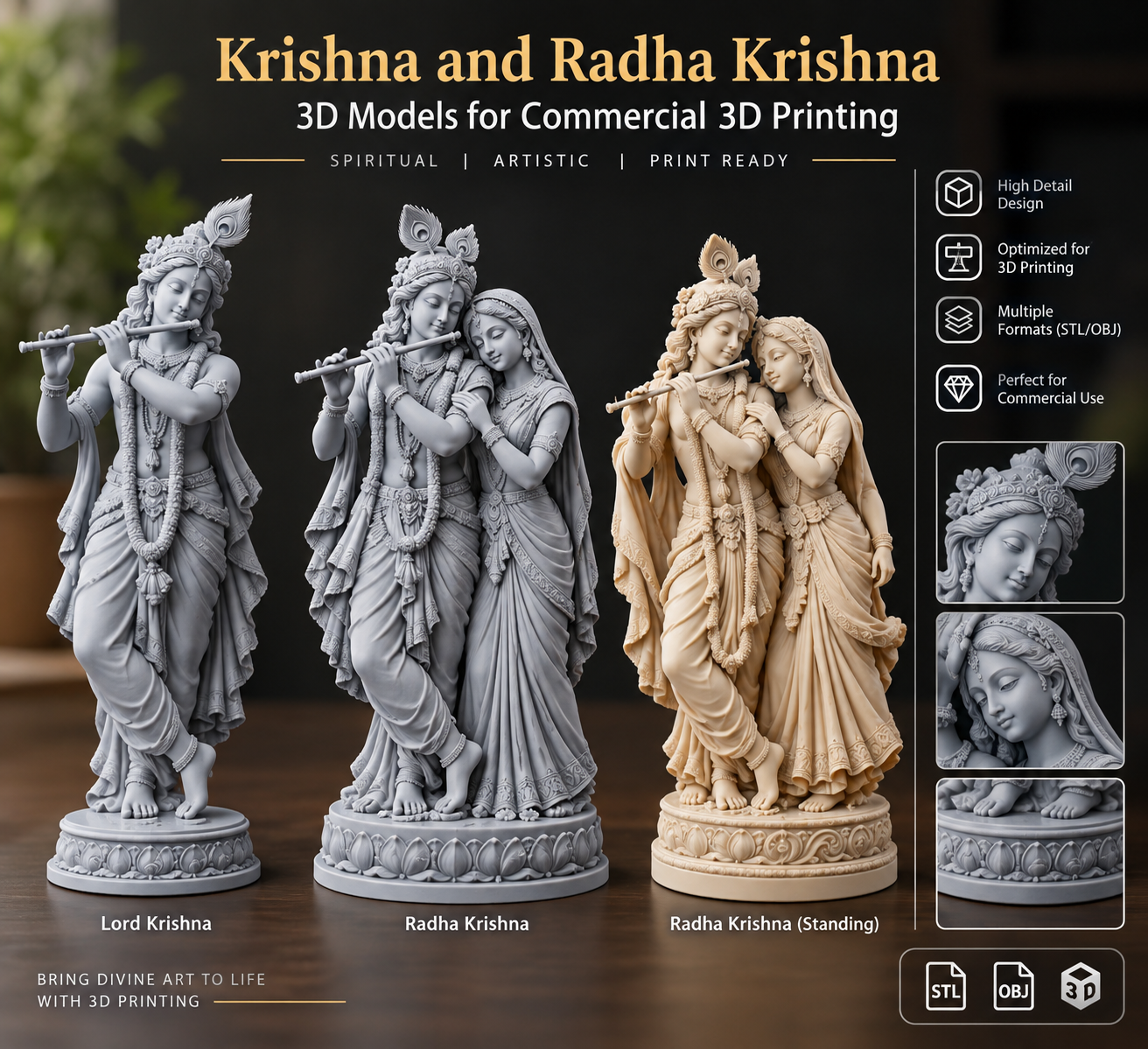
Krishna and Radha Krishna 3D Models for Commercial 3D Printing
Krishna and Radha Krishna 3D Models are useful for designers, manufacturers, artists, 3D printing businesses, and creators who want detailed religious sculptures for commercial production. A well-designed digital model can make it much easier to create decorative idols, display pieces, temple products, gifts, and customised statues through modern 3D printing methods.
When you are looking for a model to manufacture, the appearance is only one part of the decision. You also need to think about the model's file format, surface details, wall thickness, size, printability, and how easily it can be adapted for your production process.
Why Krishna and Radha Krishna 3D Models Are Popular for 3D Printing
Imagine you are preparing a new collection of decorative idols for your customers. You already know the type of product you want, but creating every sculpture from the beginning could take considerable design time. This is where a carefully prepared 3D model becomes useful.
A good Krishna and Radha Krishna 3D Models collection gives manufacturers a digital starting point that can be prepared for different printing requirements. You can adjust the scale, inspect the details and prepare the design according to the material and printer you plan to use.
For commercial manufacturers, consistency is another important benefit. Once a suitable model has been tested, you can produce different sizes while maintaining the overall appearance of the original design.
Choosing the Right Radha Krishna 3D Model
Not every radha krishna 3d model is suitable for commercial printing. A model may look beautiful on a computer screen but still create problems during production if its geometry has errors or if some areas are too thin.
Before selecting a model, look closely at:
- Overall shape and proportions
- Fine decorative details
- Thickness of smaller elements
- Base stability
- Surface quality
- File format
- Scale and dimensions
- Compatibility with your 3D printing workflow
For example, jewellery, clothing folds, facial features and ornaments can add character to a religious sculpture. However, extremely thin details may require special attention during printing.
It is therefore better to evaluate the model from a manufacturing point of view rather than choosing one simply because it looks attractive in a preview image.
How Radha Krishna STL Files Help Manufacturers
The radha krishna stl format is commonly associated with 3D printing workflows because STL files describe the surface geometry of a three-dimensional object. Once the file is imported into suitable slicing software, you can prepare it for printing.
Suppose you want to create a small decorative Radha Krishna statue for a gift collection. You might begin with one digital design and then experiment with different dimensions. A smaller version may work well for home décor, while a larger version could be produced as a centrepiece.
Before starting a large production run, always check the STL carefully. Look for holes, disconnected surfaces, non-manifold geometry and other issues that could affect slicing or printing.
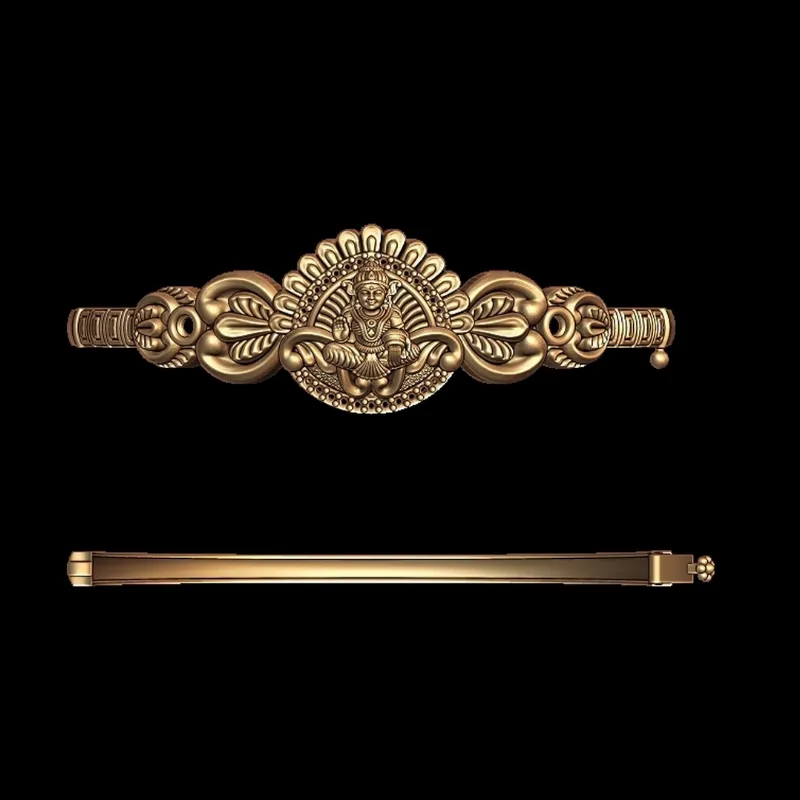
For detailed pendant designs with intricate figures and decorative elements, using a properly prepared CAD model can help make the design easier to review before production. You can explore the Krishna Arjuna Gita Chariot Pendant 3D Model CAD for a suitable reference when working on similar jewellery or pendant designs.
The quality of the digital file can have a direct effect on the final physical product, especially when the sculpture contains many small decorative elements.
Radha Krishna 3D Printable Model for Different Products
A Radha Krishna 3D Printable Model can be adapted for several types of commercial products depending on its design and licensing conditions.
Some possible applications include:
- Decorative religious statues
- Home décor products
- Temple and prayer-room décor
- Gift items
- Exhibition pieces
- Custom sculptures
- Collectible models
- Interior decoration
- Festival-related products
Size also gives manufacturers flexibility. You might print a compact model for a retail product or scale it up for a larger decorative installation.
However, scaling should not be treated as simply changing a number in the software. Increasing the size of a model can expose weaknesses in thin sections, while reducing a highly detailed sculpture can make small features difficult to print.
Krishna 3D Printing Model for Manufacturing
For businesses, a Krishna 3D Printing Model for Manufacturing should be selected with the entire production process in mind.
Think about what happens after you download or receive the model. The file needs to be checked, prepared in slicing software, printed, cleaned and finished. Depending on the material, additional processes such as sanding, polishing, painting or coating may also be required.
This is why manufacturing-friendly geometry matters.
For example, a statue with a broad and stable base may be easier to print than a design that has a narrow support area. Similarly, carefully designed ornaments can reduce unnecessary printing problems while still preserving the visual character of the sculpture.
For more inspiration and design options, you can explore our collection of Best Murugan 3D Models and Images for 3D Printing and Design to find suitable models for different printing and design requirements.
If you are producing hundreds of pieces, these small differences can become important. A model that prints reliably can save material, time and manual work over repeated production cycles.
Preparing Krishna and Radha Krishna 3D Models for Commercial Production
Before sending your Krishna and Radha Krishna 3D Models to your printer, take some time to inspect the design carefully. A quick check before printing can help you avoid common issues and ensure that the final statue looks as expected.
Start by opening the model in your preferred 3D software. Rotate the Krishna 3D Model or Radha Krishna 3D Model from different angles instead of checking only the front view. Look closely at the face, hands, clothing, jewellery, ornaments, hair, and other detailed areas. This helps you identify hidden geometry problems, unwanted gaps, thin sections, or parts that may require additional printing support.
Next, consider the final size of the product. A design intended for a 10 cm statue may behave differently when enlarged to 50 cm. Small details that look clear at one scale may become too thin, while larger sections may require additional support or adjustments. Check the overall dimensions and make sure the model fits your printer's build area before starting the job.
You should also think about the printing technology you plan to use. FDM, resin, and other 3D printing methods have different strengths and limitations. A highly detailed Radha Krishna 3D Model may benefit from a printing technology capable of reproducing small features accurately. FDM printing can be suitable for larger decorative statues, while resin printing can be useful when fine facial details and intricate ornaments are important.
The material also matters. If the finished statue needs to be strong and durable, your material selection should match its intended use. Consider whether the model will be displayed indoors, placed outdoors, painted, handled frequently, or used as a decorative piece. Choosing the right material can improve the strength, surface quality, and overall appearance of the finished Krishna 3D Model.
Creating Better Products with a Radha Krishna 3D Model
A radha krishna 3d model can become more than just a file on your computer. With the right preparation, it can become the foundation for a complete commercial product.
Consider a small business that wants to introduce a collection of devotional décor. Instead of producing one fixed-size statue, the business could explore multiple sizes, finishes and product presentations based on a suitable digital design.
For instance, the same concept might be offered as a tabletop statue, a larger decorative piece or a customised product.
The important point is to understand the model's permitted usage before commercialising it. Not every downloadable 3D model automatically comes with commercial manufacturing rights. Always check the licence and usage terms before selling physical products made from a digital file.
What Makes a Good Radha Krishna 3D Printable Model?
When comparing a Radha Krishna 3D Printable Model, don't focus only on the preview render. Look at the practical information provided with the design.
A useful model should have clean geometry, appropriate detail and dimensions that suit your intended application. If technical information is available, check the polygon count, file format, dimensions and any recommended printing settings.
You should also consider whether the model requires extensive support structures. Too much support can increase printing time and post-processing work.
For commercial use, repeatability is especially valuable. If the same design can be printed consistently across multiple production batches, it becomes easier to maintain product quality.
Using Radha Krishna STL Files in a Commercial Workflow
A radha krishna stl file can fit into a straightforward production workflow:
- Select the appropriate model.
- Check the licence for commercial use.
- Inspect the geometry.
- Choose the required dimensions.
- Repair the mesh if necessary.
- Import the file into slicing software.
- Select suitable print settings.
- Run a small test print.
- Inspect the finished piece.
- Move to larger production once the result is satisfactory.
A test print is particularly useful when you are working with a new model. It allows you to identify problems before spending significant amounts of material and production time.
Why Businesses Should Test Before Bulk Printing
Imagine ordering materials for a large batch only to discover that a small ornament repeatedly breaks during printing. The problem may not become obvious until several hours of printing have already been completed.
Testing helps prevent this situation.
Start with one or a few samples. Examine the facial details, clothing, ornaments, base and other delicate areas. Check whether the final surface meets your expectations.
Once you are satisfied, you can establish repeatable settings for the production process.
This approach is useful whether you are a small 3D printing business, a product designer or a manufacturer producing devotional décor at scale.
Finding the Right Krishna 3D Printing Model for Manufacturing
When searching for a Krishna 3D Printing Model for Manufacturing, think about your end customer as well as your printer.
Ask yourself what the finished product should look like. Is it intended to be a small home decoration? A premium statue? A customised gift? A temple-related decorative item?
Your answer can guide your choice of model, size and printing technology.
A detailed design may be ideal for premium products, while a simpler design may be more practical for high-volume manufacturing. There is no single model that is perfect for every business.
The best choice is the one that balances appearance, printability, production time and the requirements of your customers.
Final Thoughts
Krishna and Radha Krishna 3D Models offer manufacturers a practical way to bring traditional devotional designs into modern 3D printing workflows. Whether you are creating a small decorative product or developing a larger commercial collection, the digital model is an important part of the final result.
Take time to inspect the geometry, select the right file format, confirm commercial licensing and test the design before beginning bulk production. Paying attention to these details can help you achieve cleaner prints and more consistent products.
A carefully selected radha krishna 3d model, combined with the right printer, material and finishing process, can give you the flexibility to create products that suit different customers and markets.
Frequently Asked Questions
1. How can I choose the right Krishna and Radha Krishna 3D Models for commercial printing?
Choose Krishna and Radha Krishna 3D Models based on geometry quality, level of detail, file format, printability, dimensions and commercial usage rights. A test print is also recommended before starting bulk production.
2. What should I check before using a radha krishna 3d model for manufacturing?
Before using a radha krishna 3d model, check the mesh for errors, examine thin sections and confirm that the model's licence allows commercial manufacturing. You should also make sure its design suits your selected printing method.
3. Why is the radha krishna stl format useful for 3D printing?
A radha krishna stl file contains the surface geometry needed by many 3D printing workflows. It can usually be imported into slicing software, where you can adjust its size and prepare the printing parameters.
4. Where can a Radha Krishna 3D Printable Model be used?
A Radha Krishna 3D Printable Model can be used for decorative statues, collectibles, home décor, religious displays, customised gifts and other physical products, provided the model's licence permits the intended use.
5. What should manufacturers consider when selecting a Krishna 3D Printing Model for Manufacturing?
When selecting a Krishna 3D Printing Model for Manufacturing, consider print reliability, detail, material requirements, production size, support requirements, finishing work and whether the design can be reproduced consistently.